
When buying a home or refinancing an existing mortgage, one of the first major decisions you’ll face is choosing where to secure your home loan. Should you walk into your local bank branch or partner with an independent mortgage broker?
Both avenues can secure your mortgage, but the experience, loan selection, rates, and approval process differ significantly.Here is a breakdown of how mortgage brokers and banks compare so you can choose the best fit for your financial situation.
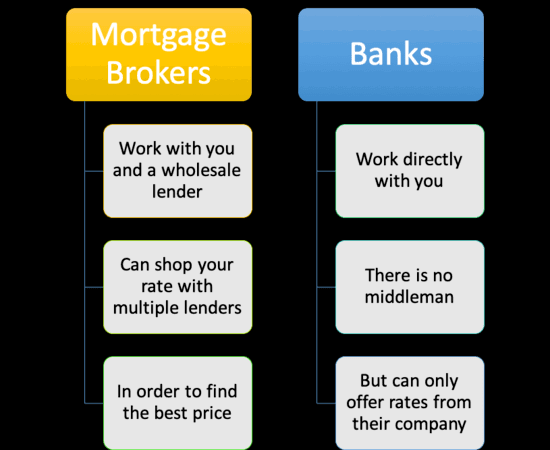
How brokers and banks process mortgage applications. Source: The Truth About Mortgage
What Is the Difference?
- Mortgage Broker: An licensed independent loan specialist who acts as an intermediary between you and multiple wholesale lenders (including credit unions, monoline lenders, trust companies, and banks). They shop around on your behalf to find competitive rates and products tailored to your financial profile.
- Direct Bank (Lender): A financial institution (such as a retail bank or credit union) that originates and services loans directly in-house. When you speak to a loan officer at a bank, they can only offer the specific mortgage products created by their institution.
Side-by-Side Comparison
| Feature | Mortgage Broker | Retail Bank |
|---|---|---|
| Lender Access | Access to dozens of wholesale lenders | Limited to internal bank products only |
| Cost to Buyer | Usually free (lenders pay commission)* | Free consultation (salary/commission by bank) |
| Product Selection | High flexibility for unique income/credit scenarios | Standardized lending criteria and rigid guidelines |
| Negotiation | Brokers shop multiple rates on your behalf | Rate discounts depend on existing relationships |
| Relationship | Single point of contact focused solely on mortgages | Opportunity to bundle checking, credit cards, or wealth management |
*Note: In non-standard or private lending cases, brokers may charge an administrative fee, but standard prime mortgages incur no broker fee for the buyer.
When to Choose a Mortgage Broker
A mortgage broker is often the best fit if you want variety, convenience, or have a non-traditional financial situation. If you’re buying your first home, explore our first-time home buyer mortgage options to understand how we can help you navigate the mortgage process:
- You Have Non-Standard Income or Self-Employed Status: Freelancers, business owners, and gig workers often struggle with standard bank qualification metrics. Brokers have access to alternative lenders specializing in non-traditional income verification.
- You Want to Shop Around Without Doing the Heavy Lifting: A broker submits one application and pulls your credit once, then compares offers across multiple wholesale lenders to negotiate low rates and favorable terms.
- Your Credit Score Needs Flexibility: If your credit history has a few blemishes or isn’t within the top tier, a broker can match you with specialized lenders who look beyond rigid credit cutoffs.
When to Choose a Direct Bank
Going directly to your primary bank makes sense in specific, streamlined scenarios:
- You Have Strong Relationship Discounts: If you hold significant assets, investments, or multiple accounts with a major bank, you may qualify for specialized “relationship pricing” or premium borrower discounts that beat market rates.
- You Prefer Everything Under One Roof: Managing your checking account, credit cards, auto loans, and mortgage within a single online banking platform offers convenience for simple financial setups.
- You Want Direct Proprietary Products: Certain specialized local credit union programs or specific proprietary bank grants are only accessible by walking into the branch directly.
Which Option Is Right for You?
- Go with a Mortgage Broker if you want to compare multiple lenders at once, need customized advice for unique financial circumstances, or want an advocate shopping for the absolute best rate across the market.
- Go with your Bank if you have substantial existing relationship balances that unlock exclusive discounts, or if you prefer having all your accounts consolidated in one online portal.
Want to know what questions to ask when interviewing a mortgage broker?